
















Many city dwellers tend to think of small towns and rural areas as scenic refuges where they can regroup and enjoy a more leisurely pace, a lower cost of living, clear skies, natural beauty, neighborliness and plenty of space.
Having spent most of my adult life in the DC and New York areas, I tended to think of Schuylkill County that way, even though I grew up in Pottsville and was well aware that it, like any other place, has its problems. Still, I was thrilled to be able to retire here with my husband.
While our area is often described as rural, its official designation is “micropolitan.” In fact, first-time visitors don’t quite know how to describe this mix of farmland and shopping centers, forests and industrial parks, mountains and valleys, townhouse developments and 19th Century storefronts.
About 20 years ago, I read a series of articles about how cities around the world were siphoning people from counties like Schuylkill, and I wondered what would become of them as so many of us moved away for better jobs. Would these places end up as mere playgrounds for the wealthy or affordable havens for retirees? Would they have enough workers to keep functioning?
An even more sobering question has emerged at recent county commissioners’ meetings: Can anything stop the rich and powerful from using our communities as dumping grounds for their toxic projects?
Residents have lashed out at the push to inflict data centers on our county, the failure to rein in an existing biosolids (a.k.a. sewer sludge) processing plant and the planned expansion of a literal garbage dump.
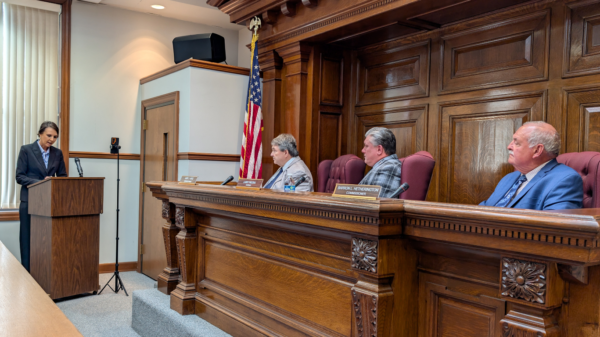
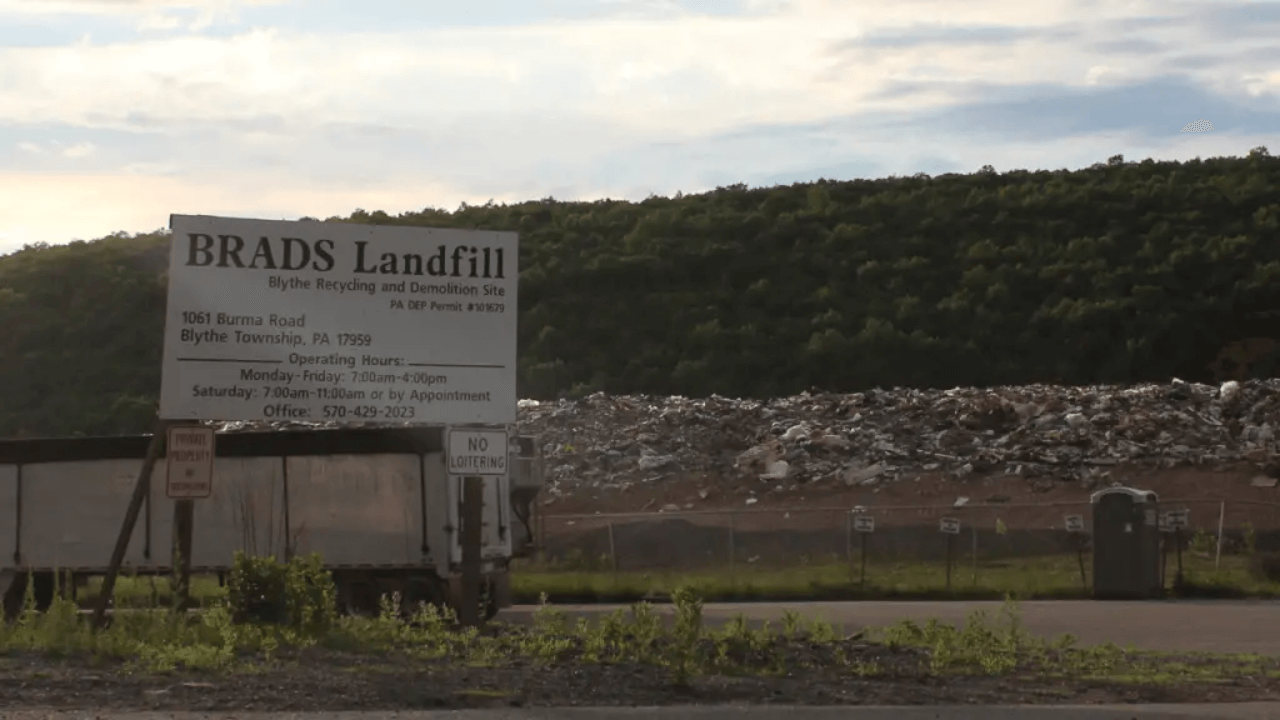
At the latest meeting, which ironically fell on Earth Day, former District Magistrate David Plachko spoke out against the Blythe Recycling and Demolition Site Landfill’s dealto buy 177.4 more acres, which would bring it just a half-mile from populated areas of St. Clair.
Fellow Saint Clair resident Erin Portland noted that the state Department of Environmental Protection already found BRADS, which is owned by Waste Connections of Texas, has committed violations that include emitting hydrogen sulfide, a toxic gas that smells like rotten eggs, at three times permitted levels.
Meanwhile, western Schuylkill County residents have been amping up their complaints of a porta potty-like stench from Natural Soil Products, a Tremont biosolids processing company owned by Port Washington, New York-based Tully Environmental Inc.
Even worse, that area could end up as a place of infamy if the Department of Homeland “Security” forges ahead with its cockamamie plan to open a 7,500-bed ICE concentration camp in Tremont Township.
Besides the stigma of such an abomination, the township and nearby Borough of Tremont’s water supply and sewer service can hardly accommodate the municipalities’ current population of about 2,000.
Moreover, the federally operated detention center could end up costing the township a lot of money, if the one in Broadview, Ill., is any indication.
Brianna DelValle of Orwigsburg cited public radio station WBEZ Chicago’s report that a surge of inmates from DHS’s “Operation Midway Blitz” forced the suburban village to rack up nearly $400,000 in unexpected costs, mainly for additional ambulance service, legal expenses and overtime pay for its police and fire departments.
Earlier this month, Roseann Weinrich, a retired science teacher from Butler Township, had asked Schuylkill’s commissioners to sign a petition for a statewide moratorium on data center construction and operations so elected officials and the public can assess their effects on people and the environment.
Is anyone really clamoring for one of these energy- and water-hogging structures to come to their neighborhood? About the only people who want them – though not near their own homes — are Big Tech executives, construction companies and the politicians who take their donations.
Melinda Deibert of North Manheim Township raised the subject again on Earth Day, and GOP Commissioners’ Chair Larry Padora reiterated his position that data centers are inevitable, but they don’t need tax breaks and should only be in appropriate places, like abandoned coal land.
(Since much of this development is to accommodate the anticipated boom in artificial intelligence, I have to ask again: How much of that do we really need or even want?)
It was good to hear that the commissioners have been against the landfill since its inception and plan to address that problem and the ones stemming from Natural Soil Products at an upcoming meeting with DEP Secretary Jessica Shirley.
While Padora has said repeatedly that the commissioners can only do so much, I wish he and fellow Republican Boots Hetherington would join Democrat Gary Hess in opposing the detention center instead of hoping that the notoriously untrustworthy Trump/Project 2025 regime would honor their requests to somehow operate it humanely and wreak less havoc.
And as far as data centers are concerned, what’s wrong with taking a breath before embracing something that comes with so many consequences? As an environmentalist once told me, “When we rush industry into Pennsylvania, it usually goes badly.”
Canary note: Opinions expressed in any Op-Ed column appearing on this site are the views of the writer and are not necessarily the opinions of Coal Region Canary.
Want to be a columnist with Coal Region Canary? Contact us at newscanary@gmail.com.
Photo: Canva
Subscribe to Coal Region Canary
Get email updates from Coal Region Canary by becoming a subscriber today. Just enter your email address below to get started!Support Coal Region Canary
Like our reporting and want to support truly local news in Schuylkill County? Your small donations help. For as little as $5, your contribution will allow us to cover more news that directly affects you. Consider donating today by hitting the big yellow button below ...