













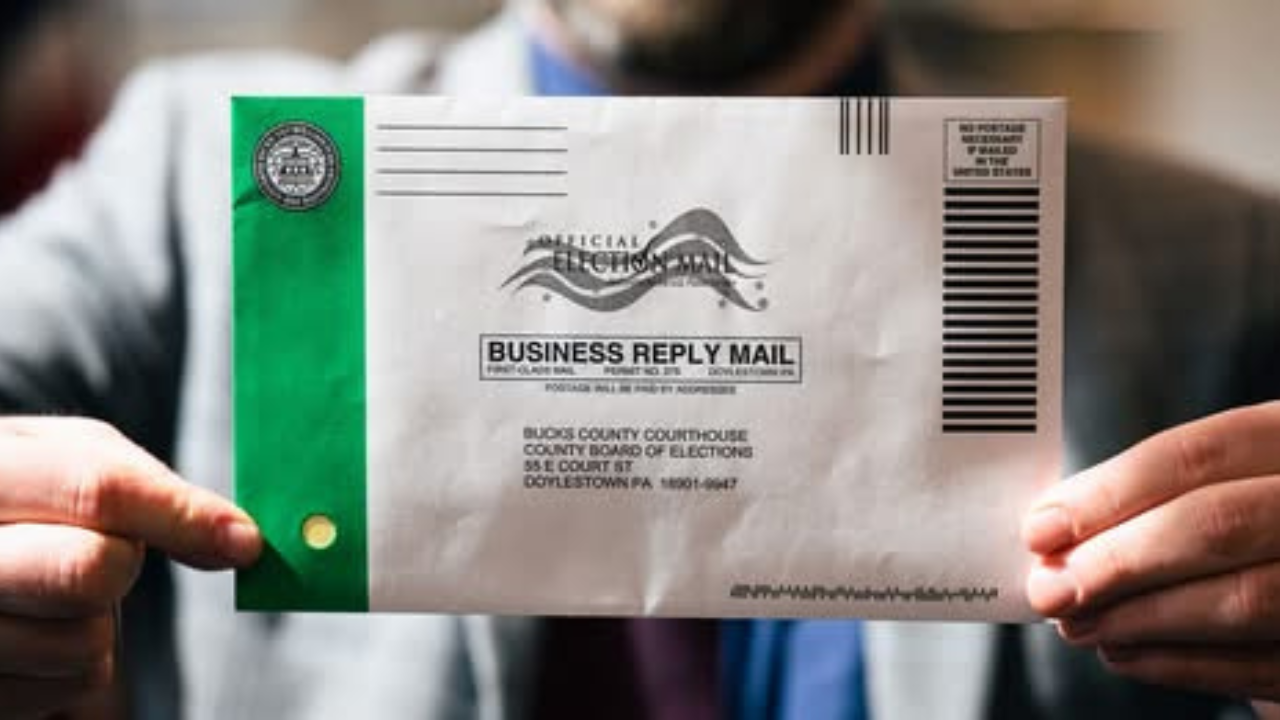
I like voting by mail because I have time to research and carefully consider candidates and ballot questions, which is probably a big reason Donald Trump and his Project 2025ers want to 86 this method as they try every which way to rig the November election.
But in Pennsylvania, where you live makes a difference in how your ballot’s treated if you make a mistake, like not signing and properly dating the declaration on the return envelope. Or submitting a ballot that’s “naked” (not enclosed in the yellow “secrecy” envelope).
Those “deficiencies” are grounds for rejecting such ballots. But in a case brought against Washington County, the state Supreme Court decided in September that the election bureau must, at the very least, use the automated State Uniform Registry of Electors (SURE) system to automatically inform voters of errors they made and give them a chance to cast a provisional ballot on Election Day.
The American Civil Liberties Union of Pennsylvania has listed my county – Schuylkill – among four of the state’s 67 that apparently aren’t complying with that decision, but our county commissioners and solicitor say we are.
Who’s right? I’m not a lawyer, and I can’t guess how a judge would rule. But after listening to various points of view, I’ve found that this issue is more complicated than I’d thought.
I sympathize with election bureaus, which must navigate rules that can change at the drop of a court decision. But I think my county can and should do more to keep deficiencies from disenfranchising voters, and I think the Legislature should pass laws to make elections easier for everyone while, of course, keeping them secure.
How Schuylkill County handles deficiencies
When a ballot arrives in the mail, a worker scans the outer envelope into the SURE system and, unless they happen to notice a “facial defect” (a wrong date or missing signature), enters a code that sends the voter a message confirming receipt. The voter then has no reason to think there’s any problem with their ballot.
That’s because the Election Bureau doesn’t look for deficiencies until Election Day, when the state allows “pre-canvassing” (inspecting and opening the ballots) to start at 7 a.m. Only sometime after that does someone who made a mistake learn that they must vote provisionally at the polls – assuming they can get there before 8 p.m. and that they see the message.
(The Bureau does examine hand-delivered ballots and immediately lets voters know about facial defects.)
It did issue earlier warnings of deficiencies in ballots received by mail in 2022, Director Al Gricoski said. “The state said, ‘Go ahead and do it.’ And then the court order came in and said that you were not allowed to do that. And so the state redirected us again that we are not allowed to because once your vote was in the mail, it was considered a cast vote.”
Gricoski also expressed concern that warning voters before pre-canvassing could jeopardize the county’s share of Pennsylvania’s annual Election Integrity Grant. The grant, whose instructions also state that pre-canvassing can’t start before Election Day, came to $472,287 in the recently ended fiscal year, more than half of his office’s budget.
And in recent years, there have been fewer deficiencies as ballot instructions became clearer and voters were urged to be more careful. Of the 4,962 mail-in and absentee ballots received in this year’s primary, seven were naked, and 15 lacked a signature, Gricoski said.
Still, isn’t every vote supposed to count, especially when the SURE system provides a way to notify voters of problems immediately instead of sending them a reassuring message?
What advocacy groups say
Common Cause Pennsylvania published a report in February with the ACLU-PA that showed deficiency rates decline sharply when counties take more proactive measures, like returning those ballots or canceling them and issuing new ones, Executive Director Philip Hensley-Robinsaid.
“At Common Cause, we believe that voters should not be disenfranchised because of a trivial mistake,” he added.
And Amy Widestrom, executive director of the League of Women Voters of Pennsylvania, said notification of a deficient ballot on Election Day is “functionally too late. You can’t do anything … if you can’t show up on that day, whereas notice of the condition of their ballot days or weeks before Election Day gives voters real time to act.”
What the state says
In the Washington County decision, the Supreme Court said segregating ballots based on “patent defects” is not pre-canvassing. The Department of State’s latest guidance to counties cites that case, saying they should check for facial defects of ballots as they’re received and assign “the proper ballot code” and not the “Record – Ballot Returned” one for those they know won’t be counted.
Lebanon County, which borders Schuylkill, decided in April to notify voters of deficiencies that way instead of waiting until Election Day. The potentially misleading “Ballot Returned” code was a key issue, according to Duncan MacLean, one of the residents who advocated for the change.
Elections Director Sean Drasher said at the time that a clerk or temp would check the ballots and pull those with facial defects before scanning begins.
Bucks County uses return envelopes with a small hole punched in them so that election workers can spot naked ballots as well as unsigned and undated ones before Election Day, giving voters time to fix any problems.
How change can happen
I had concluded that only a lawsuit filed by someone who couldn’t vote because of Schuylkill County’s policy would resolve questions about it. Not only do most people want to avoid costly litigation, but with all the voting-by-mail lawsuits, court decisions are subject to change.
Widestrom, however, suggested a more effective way: more specific state laws that would apply to all counties.
“We tend to think about elections as happening at the state level or the national level, but really it’s counties that run them across the country,” she said. “And in Pennsylvania, the counties have a great deal of autonomy and latitude under the Election Code because the Election Code is so silent on some things.”
A “notice and cure” law, for example, would codify the Department of State guidance on handling mail and absentee ballots while providing details on how voters can fix those with problems.
Other improvements would include dropping the date requirement, which serves no purpose. And enacting a uniform policy on drop boxes, which other counties have but ours doesn’t. And granting election bureaus’ plea for earlier pre-canvassing, as House Bill 37 would do. And starting the vote-by-mail period earlier so that workers aren’t deluged with hundreds of ballots at a time. (Gricoski said his office has gotten as many as 500 on Election Day alone.)
But until then, I’ll turn in my mail-in ballot as soon as I can – after checking and double-checking it for deficiencies.
Canary note: Opinions expressed in any Op-Ed column appearing on this site are the views of the writer and are not necessarily the opinions of Coal Region Canary.
Want to be a columnist with Coal Region Canary? Contact us at newscanary@gmail.com.
Subscribe to Coal Region Canary
Get email updates from Coal Region Canary by becoming a subscriber today. Just enter your email address below to get started!Support Coal Region Canary
Like our reporting and want to support truly local news in Schuylkill County? Your small donations help. For as little as $5, your contribution will allow us to cover more news that directly affects you. Consider donating today by hitting the big yellow button below ...