




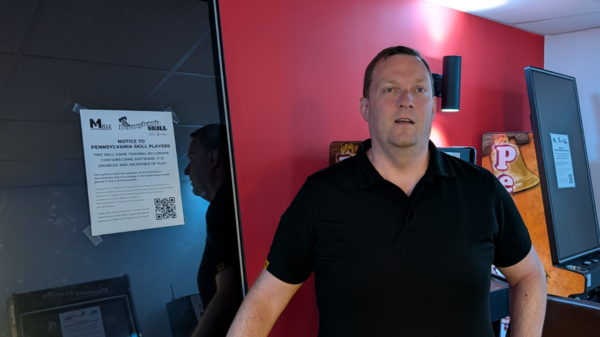











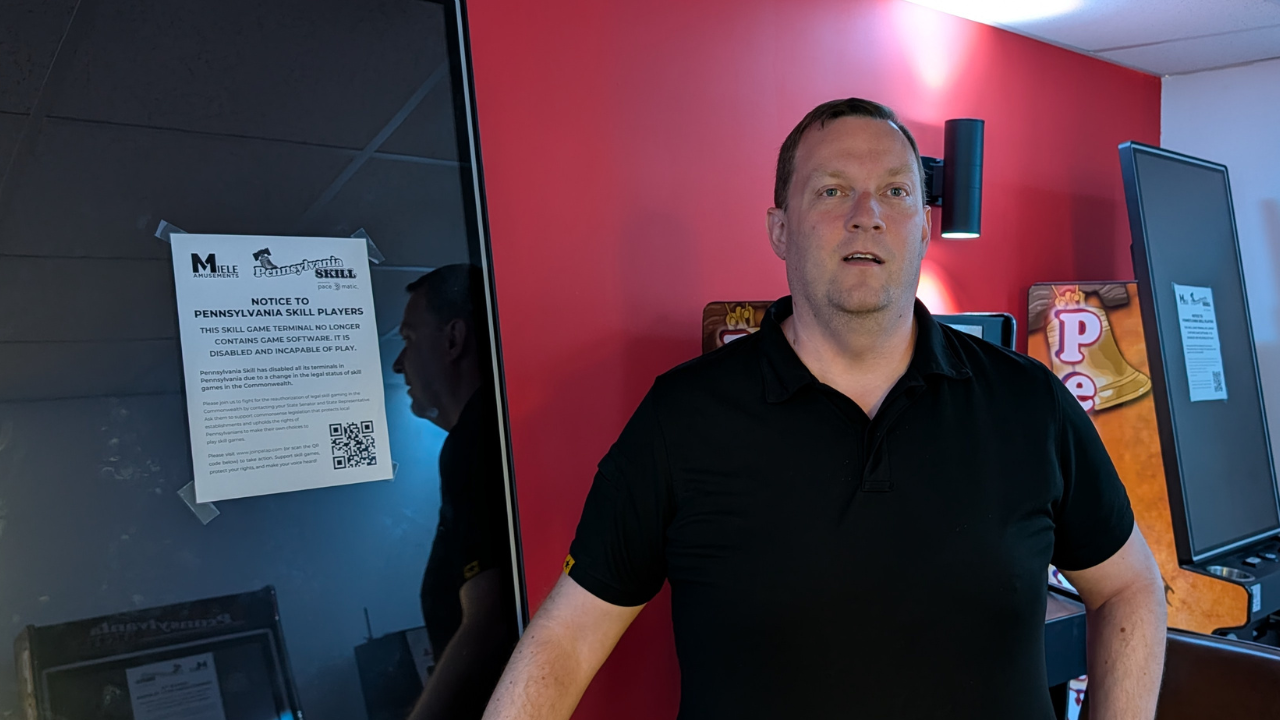
Sam’s Place owner Michael Somers says the end of skill games will cost his 20-store tobacco chain more than $1 million a year, and his employees will feel it first.
The people who will really lose, he said, are the cashiers behind his counters.
Somers, president of Sam’s Place Lottery & Tobacco Inc., told Coal Region Canary the machines are the reason Sam’s Place grew from five stores to 20. With the games set to become illegal in Pennsylvania this week, he is preparing to cut staff, end the company’s 401(k) match, and find hundreds of thousands of dollars to keep every store open.
The Pennsylvania Supreme Court ruled June 15 that skill games are slot machines under the state Gaming Act. The court put its decision on hold to give lawmakers in Harrisburg time to pass a law regulating and taxing the machines. That window closes Tuesday.
Pennsylvania State Police say businesses that still have the machines face prosecution and seizure starting Wednesday, and that unplugging them isn’t enough.
On Friday, the court turned down requests from state lawmakers and 20 charitable organizations to push back the deadline. Bills to legalize the games have passed both the state House and Senate, but neither chamber has agreed to the other’s version.
Somers spoke with Coal Region Canary on Oct. 5 at the chain’s Cressona Mall store, days before the court’s decision went into effect.
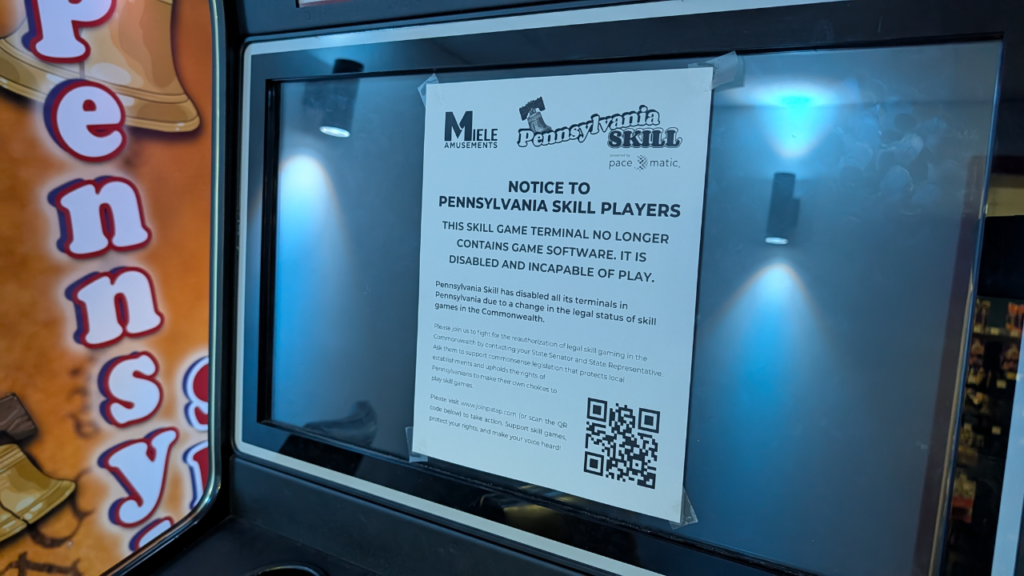
The machines in the store were already unplugged that day, each with a sign saying its software had been deactivated. They have since been removed from his stores, and from many other Schuylkill County businesses that had them.
His message to lawmakers was simple.
“Vote for the six-month extension,” he said. “If you decide we can’t make a deal, pull out in six months. Does that really affect anybody?”
Somers, who lives in Orwigsburg, started his business at a farmers market. In 2014, he bought out his largest competitor, Sam’s Place. The chain now has 20 stores, all in Pennsylvania and all within about two hours of Schuylkill County, reaching south to Leesport and north toward Williamsport and Muncy.
He didn’t put skill games in his stores until 2017. When the machines first appeared, he said, he had the same questions as everyone else, including whether having them could land him in jail. He waited until the courts had weighed in before bringing them in.
Once they were in, the money changed the business. A new tobacco store takes about three years to turn a profit, he said, and skill game revenue carried the chain through those years as it expanded.
“Sam’s Place was a chain of five stores when we put skill in, and Sam’s Place grew to a chain of 20 stores,” he said.
That growth also paid for a corporate staff he says is unheard of for a tobacco chain his size: a vice president, an operations manager, four territory managers and a cigar category manager.
Each store generally has six machines, a cap set by the vendor. Somers said he never bought his own machines. The distributor placed them at no cost to him, and he said he didn’t want to get into that “gray area.”
Sam’s Place keeps 40% of the profit from the machines in its stores. Depending on the size of the store, he estimates each location clears $2,000 to $4,000 a month from the games. Across the chain, he said, that adds up to more than $1 million a year.
The first cuts will come on the store floor. Stores that now run two employees during the day will likely drop to one.
“Every store is going to lose essentially a day shift person,” he said.
He estimated the chain could lose about 15 jobs, including two or three at the corporate level.
The company also plans to end its 4% 401(k) match, which costs about $8,000 a month. The Sam’s Place plan covers employees of Magnolia Health Group LLC, a home care business he also owns, so ending the match hits workers at both companies. He said about 100 people stand to lose it.
At the time of the interview, a 30-day notice ending the match was sitting in his inbox. He said he hadn’t signed it yet because he was waiting to see whether lawmakers would act on an extension by the end of the week.
He has already stopped taking a paycheck.
“I told my accountant, ‘Don’t send me a paycheck. Don’t pay me again until we figure this out,'” he said.
His vice president is considering a pay cut, and staff have been pulling old stock out of back rooms and putting it on sale to bring in cash. To keep all 20 stores open, he said, the company needs to find $300,000 to $400,000.
Closing the weaker stores isn’t an easy way out, he said. A store like the one at Cressona Mall costs about $300,000 to build and stock, the company borrowed to grow, and every location is under a lease.
“You can’t call up the bank and say, ‘Any chance you can forget about the other two years of payments?'” he said. “Unfortunately, 120 days is just not enough time for a chain my size.”
He knows some readers won’t have much sympathy for a chain owner, and he doesn’t ask for it. To those who say he knew the risks when he put the machines in, he doesn’t argue.
“If they become illegal, then they’re illegal. They have to get rid of them,” he said. “But every action has a reaction. We’ve spent the money, and we have overhead.”
That kind of uncertainty comes with his line of work, he said.
“Every year, I think for myself, ‘Oh man, I’m going out of business.’ That’s the business we’re in,” he said. “When something comes out that we can make money off of, it’s great. Hopefully it lasts for a while.”
He also defended the business itself.
“We’re not telling people they have to smoke. We’re not telling people they have to gamble,” he said. “But if you’re going to do it, you should be able to do it in a friendly atmosphere.”
What frustrates him is the timing. He said lawmakers left the issue until the last minute.
“They got the budget passed, and then they went on their summer breaks, while the rest of us couldn’t go on vacation because we’re nervous about losing our business,” he said.
He said he respects lawmakers and will pull the machines if that’s what the law requires. He just wants more time.
“They’ve been around for a decade,” he said. “What’s another six months?”
Subscribe to Coal Region Canary
Get email updates from Coal Region Canary by becoming a subscriber today. Just enter your email address below to get started!Support Coal Region Canary
Like our reporting and want to support truly local news in Schuylkill County? Your small donations help. For as little as $5, your contribution will allow us to cover more news that directly affects you. Consider donating today by hitting the big yellow button below ...
Jamie J
October 12, 2026 at 11:53 am
I certainly sympathize with this gentleman and especially his employees who may lose their jobs or benefits. Nobody wants to see that happen. But let’s be fair. Every business involves risk, and anyone who chose to operate skill games did so knowing full well that these machines existed in a legal gray area. In fact, he acknowledges that himself in the article.
What I find particularly interesting are the numbers. He reports his company received more than $1 million annually from these machines, yet his business only kept 40% of the profits. Think about that for a moment. If his share was $1 million, the remaining 60% represents another $1.5 million going elsewhere. And that’s just one business with approximately 120 machines. Consider what distributors operating hundreds of machines across Pennsylvania have been making.
And that brings me to what I believe is the real issue. The primary beneficiaries of this unregulated business model aren’t the local businesses, veterans’ clubs, or fire companies we’ve heard so much about. They’re the commercial operators and distributors collecting the majority of the proceeds.
Here’s something else worth considering. In other states, licensed gaming companies provide electronic gaming equipment to charitable clubs under arrangements where the clubs retain approximately 65% of the net gaming proceeds, while the commercial providers receive the remaining 35%. These companies manage to operate profitably while absorbing the substantial costs of regulatory compliance and, in some cases, even paying the taxes and fees associated with the locations.
Think about that. Legitimate, licensed companies can make money receiving just 35% of the proceeds while complying with meaningful regulations, yet we’re being told that Pennsylvania needs to preserve a system where commercial interests receive 60% or more. Does anyone else find that troubling?
Unfortunately, our local businesses and veterans’ organizations have become pawns in a very effective campaign to preserve a business model that allows others to make enormous amounts of money. Their genuine concerns about losing revenue are being used to advocate for legislation that would allow those commercial interests to continue doing exactly what they’ve been doing.
I also found his question, “What’s another six months?” particularly troubling. Well, it’s another six months of gambling operating without the independent equipment testing, financial accountability, regulatory oversight, and consumer protections we require of licensed gambling operations. It’s another six months of exposing potentially vulnerable Pennsylvanians to an industry that has not been subjected to the safeguards we have determined are necessary for every other form of legal gambling. I understand the financial concerns, but extending unregulated gambling simply because some businesses have become dependent on the revenue is both irresponsible and unacceptable. At some point, the interests of Pennsylvania consumers have to take precedence over the financial interests of those profiting from these machines. That point is long overdue.
There’s also something else that seems to get lost in this discussion. If there’s one industry that simply cannot be permitted to operate on the honor system, it’s gambling. The gambling industry has a long and well-documented history of unlawful activity, and the criminal histories of some individuals involved in the skill-game industry raise serious concerns, to say the least.
I would hope that the responsible operators, those genuinely interested in establishing a legitimate and sustainable industry, would be among the strongest advocates for meaningful regulation and robust independent oversight. After all, shouldn’t they want to distinguish themselves from those who have given the industry a questionable reputation?
Only through proper licensing, background investigations, independent equipment testing, financial accountability, and ongoing regulatory oversight can we establish basic consumer protections and ensure the integrity of the industry.
I support our small businesses and veterans’ organizations, and I recognize how important this revenue has become to many of them. But I also believe they deserve better options than a system where they provide the locations and political support while the majority of the proceeds go elsewhere. Other states have demonstrated that regulated electronic charitable gaming can provide meaningful revenue to clubs while allowing legitimate commercial providers to make a profit.
At the end of the day, we should be asking who really stands to benefit from the proposed legislation, not just who stands to lose from the current situation. And perhaps more importantly, why should the financial interests of a relatively small group of commercial operators take precedence over protecting Pennsylvania consumers and ensuring our veterans’ organizations and local clubs receive a fair share of the revenue?
Those seem like reasonable questions to me, and I think Pennsylvanians deserve an honest discussion about them. Regulation before operation shouldn’t be a controversial concept, especially when we’re talking about gambling.
KD
October 13, 2026 at 2:49 am
Good I’m happy they’re gone, and I hope they stay Gone! That got my vote! This guy’s nothing more then the local drug dealer! Pushing Tobacco, Which kills millions of people each year, (Thats a fact) and Taking people’s money from Gambling! 2 of some of the biggest addictions in America! Hes nothing more then a local drug dealer praying on weak minded individuals! i have no sympathy for him!
Jim Harlin
October 13, 2026 at 3:16 pm
This shop owner is making money off people that have an addiction to “gambling” Looked up his home, it is valued at over $900,000 in Orwigsbug. Scum in my opinion.
Scoob
October 15, 2026 at 5:18 pm
No sympathy for these type of businesses. The people who usually played them are the people eho shouldn’t be playing them. They spend their “free pay check” SSD then pester everyone for a dollar or a cigarette. I support the ban 100%