














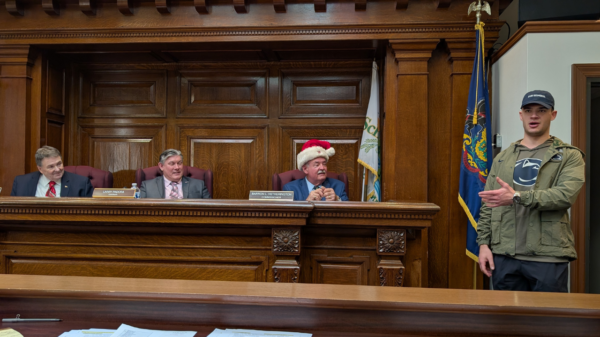



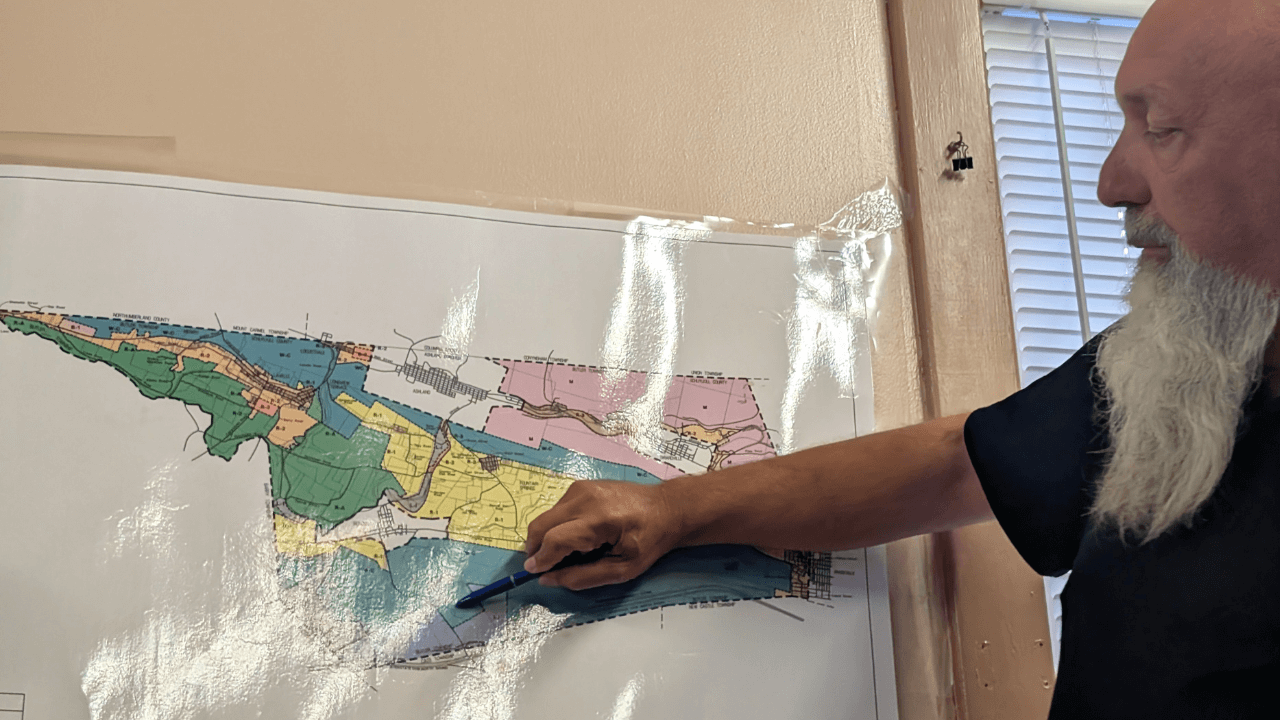
Supervisors in Butler Township adopted a pair of ordinances Monday night that they say will put a proposed data center project where it belongs and nowhere it doesn’t.
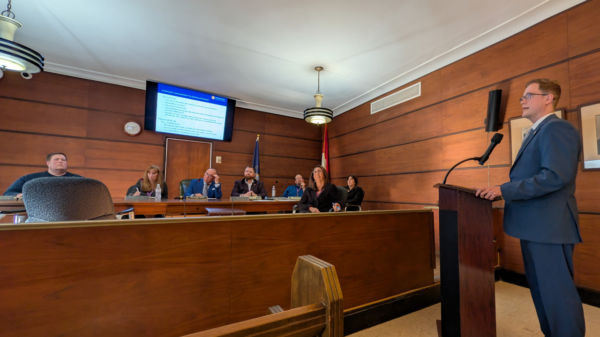
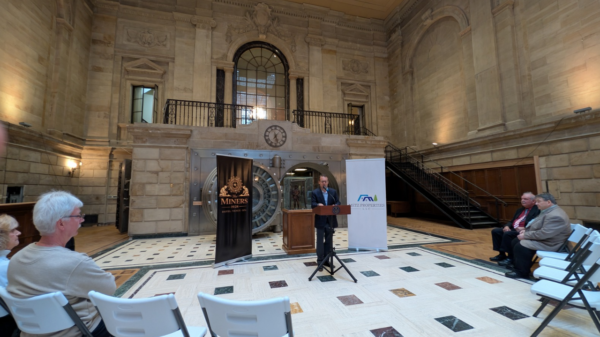
The ordinances were adopted unanimously at a special meeting of the supervisors that followed a lengthy public hearing on the changes.
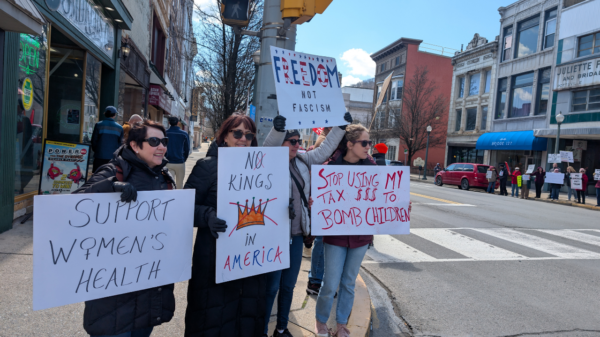
During that public hearing, more than 75 people packed into the cramped township building and expressed their displeasure, mostly, and concerns with data centers in general and another rumored project in New Castle Township.
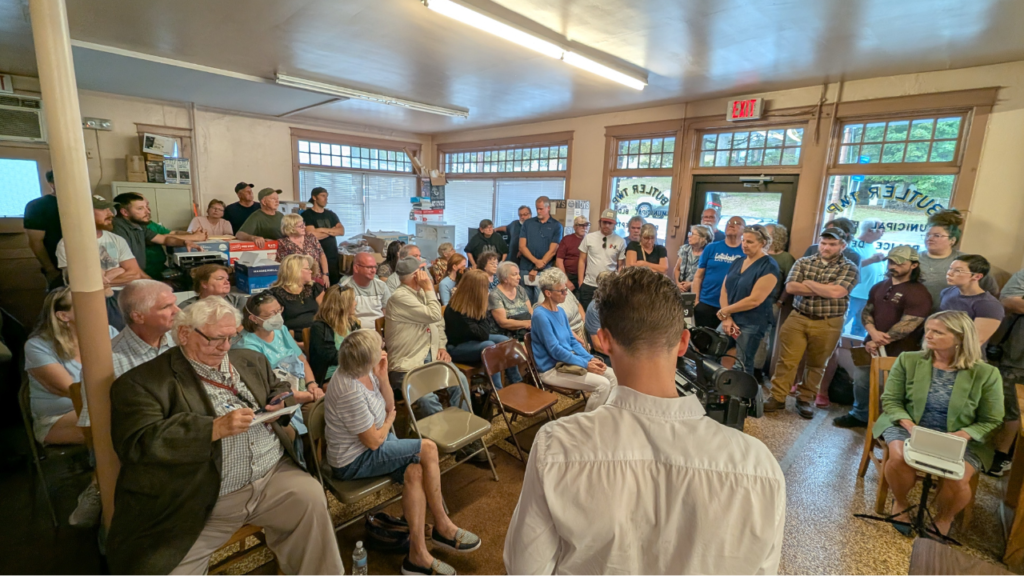
Concerns ranged from the aesthetic, such as not wanting to have hulking data center buildings near their homes, to the environmental, like a potential strain on natural resources and the loss of forested land in the township.
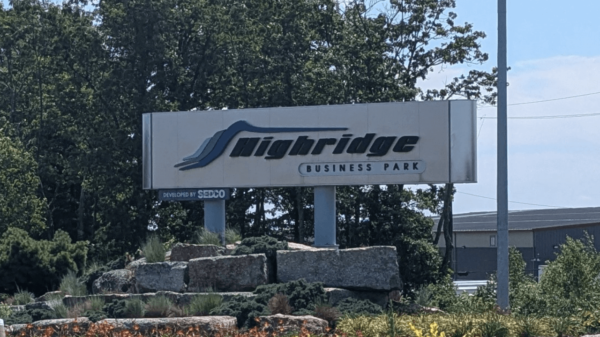
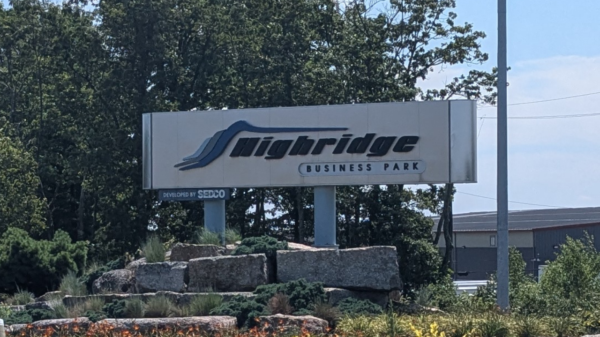
However, Butler supervisors say the ordinances they adopted on Monday will pigeonhole any proposed data center project in the township to an area they feel is the right spot for one, the Highridge Business Park. Highridge is made up of parts of Butler, Foster, and Cass townships.
Ordinance 2025-3 amends the township’s zoning maps to transform tracts of land at Highridge Business Park from a conservation district to an industrial area. And 2025-4 creates regulations on data centers and creates a series of rules governing their approval and operation within Butler Township.
“We have to put them somewhere”
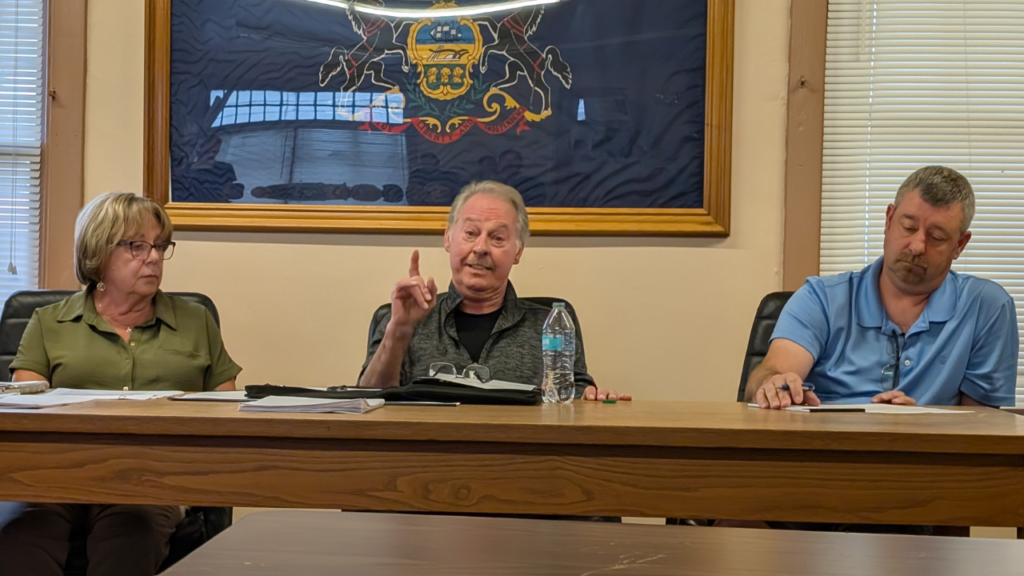
They feel creating a special zoning district for data centers prevents a would-be developer from coming in and choosing a less suitable area of the township for their project.
“We have to put them somewhere,” Solicitor Christopher Riedlinger told residents Monday, often citing a “state law” that required data centers be allowed where they’re proposed. “It’s a matter of where we’re going to put them.”
Presumably, Riedlinger meant that Butler Township couldn’t legally block data centers from being constructed. But it could dictate where they could be located through zoning measures.
He said by passing the two zoning ordinances on Monday, Butler Township was “getting ahead of the curve” with regard to any data center project. Without these ordinances in place, he said, a data center developer could seek “site specific relief” from zoning laws and conceivably put their project in an area many might feel is undesirable.
Data Center Project Clearly in the Works But No Specifics Given
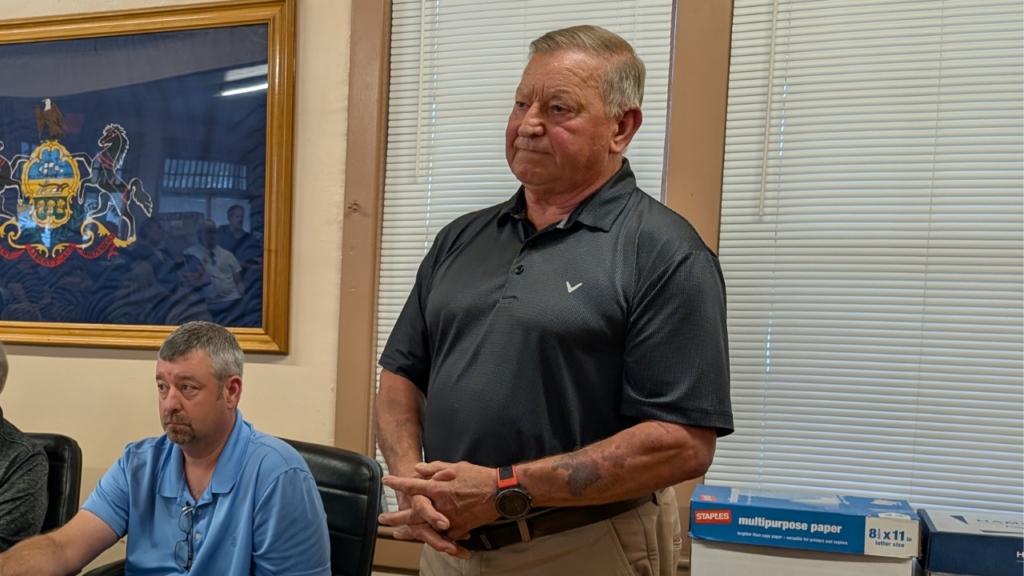
It was clear that there is a data center project in the works in Butler Township. It’s independent of the rumored project in New Castle Township that’s drawn the ire of Frackville area residents who say that project will be right outside their front doors.
Instead, the Butler Township project that was discussed in very specifically non-specific terms on Monday, would likely be located in the Highridge Business Park.
According to Schuylkill Economic Development Corp. president Frank Zukas on Monday, the project has two buildings with 1.26 million square feet of floor space. He said the area the zoning district created by the adopted ordinances has already been permitted for a pair of 1 million square-foot distribution centers.
“Zoning is the missing ingredient,” Zukas said.
Trying to allay residents’ concerns about a strain on water resources, Zukas said the proposed project – which hasn’t been formally submitted for any review at any level just yet – would operate on a closed loop water system.
Ordinances Explained
Here is a brief explanation of the ordinances Butler Township approved on Monday:
2025-3
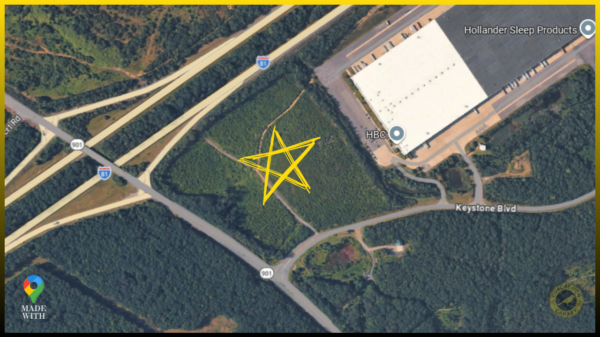
This ordinance changes how a large piece of land near Interstate 81 and Gordon Mountain Road can be used.
The property, which was previously zoned as Woodland Conservation, is now being rezoned into the Interchange District, a category meant for commercial and industrial development near highway exits. In addition, the township is creating a special “Data Center Overlay” on part of this land. That designation specifically marks it as suitable for data centers.
The rezoning applies to parcels along the west side of Interstate 81 and the north side of Gordon Mountain Road, totaling a little over 72 acres. These parcels are specifically identified by their tax map numbers. The zoning map will now show them as part of the Interchange District, with certain parcels also highlighted as being in the Data Center Overlay.
Rezoned from Woodland Conservation (W-C) into the Interchange (I-1) District:
- 04-09-0039.000
- 04-09-0038.000
Designated as part of the Interchange (I-1) District Data Center Overlay:
- 04-09-0039.000
- 04-09-0038.000
- 04-09-0039.001
- 04-09-0039.002
- 04-10-0005.000
2025-4
This ordinance first makes sure data centers are officially defined under township zoning rules, along with accessory facilities like substations, cooling towers, pumps, and backup power systems.
It also sets up where these centers can be located. Data centers are allowed in the Interchange District, but they are not permitted next to residential areas. In areas where the township has already established a “Data Center Overlay Zone,” facilities that use air cooling or closed-loop water cooling systems are permitted by right, as long as they follow all the other rules.
A number of operating requirements are laid out in the ordinance. Data centers must be screened with wide buffer yards and berms, and their entrances must be on arterial streets designed to handle heavy traffic. Parking and loading areas must be paved, and the number of parking spaces must be twice the number of employees working during the busiest shift.
Facilities also must provide fire lanes, give training to local emergency responders, and make sure that trucks and employee vehicles do not block public roads. Security fencing is required but cannot be barbed wire or chain-link; instead, the fencing must be solid and no more than 12 feet high.
Noise is another major focus of the ordinance. Developers are required to conduct sound studies, both before and after construction, to prove that the data center will not exceed certain noise limits. During daytime hours the limit is 75 decibels at the property line, and during nighttime hours and weekends the limit is 57 decibels. Emergency equipment like backup generators is allowed to run occasionally for testing, but only within these noise restrictions.
Developers must also show that the township has the electrical capacity to support the facility and that sound and environmental impacts will be kept within safe levels. They must submit traffic studies, describe how they will handle things like dust, stormwater, or solid waste, and provide equipment to monitor sound levels on site.
One of the most important issues is water use.
If a data center plans to use water-based cooling rather than air cooling or aclosed-loop system, the operator must submit a detailed study. This study must show how much water will be required, where it will come from, and whether the water source is reliable without draining wells, streams, or other local supplies. The study has to include maps, geological reports, and an analysis of the effect on nearby wells and the groundwater table.
Developers must also explain how water will be recycled or disposed of. If the applicant chooses not to use water cooling, they must prove they have an alternative cooling system that won’t put stress on local resources.
Subscribe to Coal Region Canary
Get email updates from Coal Region Canary by becoming a subscriber today. Just enter your email address below to get started!Support Coal Region Canary
Like our reporting and want to support truly local news in Schuylkill County? Your small donations help. For as little as $5, your contribution will allow us to cover more news that directly affects you. Consider donating today by hitting the big yellow button below ...
Howard Pryda
September 30, 2025 at 9:02 am
Seems none of the concerned residents know about the biggest potential problem with data centers.
New evidence suggests that artificial intelligence (AI) data centers are distorting the quality of electricity delivered to homes, heightening the risks of appliance damage and fire.
The issue, known as “bad harmonics,” happens when the normal flow of electricity in steady waves is disrupted, causing erratic spikes and dips in voltage. Unaddressed, sudden surges or sags in electrical supply can lead to sparks and even home fires.
Sir John
October 1, 2025 at 7:28 am
This is already slated to be done, no matter what kind of pushback from residents. Everyone involved is getting a kick back privately. They just have to go through protocol. They don’t care about the residents