
















I worry about what data centers will do to our environment, and I worry about what artificial intelligence – the reason behind the rush to build these looming monstrosities – will do to human intelligence, not to mention, our trust, our jobs, our personal connections and our future.
More and more, we question whether what we see is real or AI. In “Mountainhead,” greedy tech bros party and scheme high above a world that disinformation is ripping apart. The 2025 film is fictional, but the consequences of unfettered Big Tech that it shows aren’t far-fetched.
As AI keeps getting foisted on me during internet searching, social media posting and email writing, I ignore the Silicon Valley bots’ offers to think for me. After all, if you don’t use your capabilities, you risk losing them.
Last month Pope Leo also sounded the alarm. With AI, “small but highly influential groups can shape information and consumption patterns, influence democratic processes and steer economic dynamics to their own advantage, undermining social justice and solidarity among peoples,” he wrote in his first encyclical letter, “Magnifica humanitas: On Safeguarding the Human Person in the Time of Artificial Intelligence.”
Then there are the massive structures that make AI possible.
Last week UN University researchers projected that by 2030, global data centers will consume nearly triple the combined annual electricity use of the more than 650 million people in Pakistan, Bangladesh, and Nigeria. They’ll also guzzle water equal to the minimum annual needs of all 1.3 billion people in Sub-Saharan Africa and occupy about 5,600 square miles of land.
It feels like a gold rush mentality here in Pennsylvania, whose energy reserves and relatively cooler climate are drawing data center developers.
Mere forecasts for data centers coming online are already driving up our electric bills because our regional grid operator, PJM, holds auctions to procure power to meet its anticipated needs three years ahead of time, said Robert Routh, Pennsylvania climate and energy policy director for the Natural Resources Defense Council.
For that reason, he said, “we should be enacting policies to protect consumers, the grid and the climate now.”
Standards vs. a “pause”
GOP state Treasurer Stacy Garrity has made data centers an issue in her run for governor against Democratic incumbent Josh Shapiro.
MORE: Schuylkill County Schools Get $2 Million in Safety, Mental Health Grant Funding
Her call for pausing these projects so local governments can update their zoning ordinances came the day after Shapiro announced the Governor’s Responsible Infrastructure Development (GRID) standards for pending data centers and guidance for municipalities to evaluate proposals.
The standards cover energy affordability, promoting transparency and community engagement, supporting workforce and economic development, and strengthening environmental protections.
Developers applying for “fast-track” permitting would have to meet those standards. Shapiro also wants the Legislature to modify existing preferential tax zone programs and sales tax breaks on data centers’ computer equipment purchases so that only GRID-conforming projects would be eligible for them.
Permits for projects that don’t qualify won’t be processed in a timely manner, making it “a near impossibility for these developers to develop their projects here,” he told residents of Archbald, a Lackawanna County town where six – yes, six! – data centers are proposed.
He expressed concern for the borough’s plight. Although his administration is “constrained somewhat” in what it can do, he said he’d “see how we can push the envelope here and look at the broader impacts on a community,” WVIA reported.
The NRDC’s Routh praised Shapiro for putting “a stake in the ground” with standards that include a commitment by developers to fully fund their energy needs. “That includes bringing all-new capacity – with targets for clean firm energy resources and battery storage – and paying for all associated grid infrastructure upgrades while also being built ‘solar ready’,” he added.
As for Garrity, a governor probably couldn’t unilaterally enact a “pause,” which she has emphasized wouldn’t be for a fixed period. (State legislators have introduced bills that would set moratoriums or allow local governments to do so.)
Shapiro campaign spokesman Manuel Bonder termed Garrity ”a desperate politician” whose “long record of supporting completely unregulated data center development makes it clear that she just can’t be trusted.”
I’m inclined to agree, given her allegiance to Donald Trump, who abhors regulating anything he or his donors do.
She herself called for deregulation on Pittsburgh radio station KDKA last August while lamenting that Pennsylvania was “years behind” in the race for data centers. And in January, she told the Pennsylvania Press Club that rural counties have “a lot of areas where you can put data centers that I think communities would welcome.”
The Money Factor
While some local officials are salivating at the tax revenue a data center would bring, residents in target areas fear that more noise and heat, higher energy bills, scarcer water supplies, lower property values and general uglification would also result.
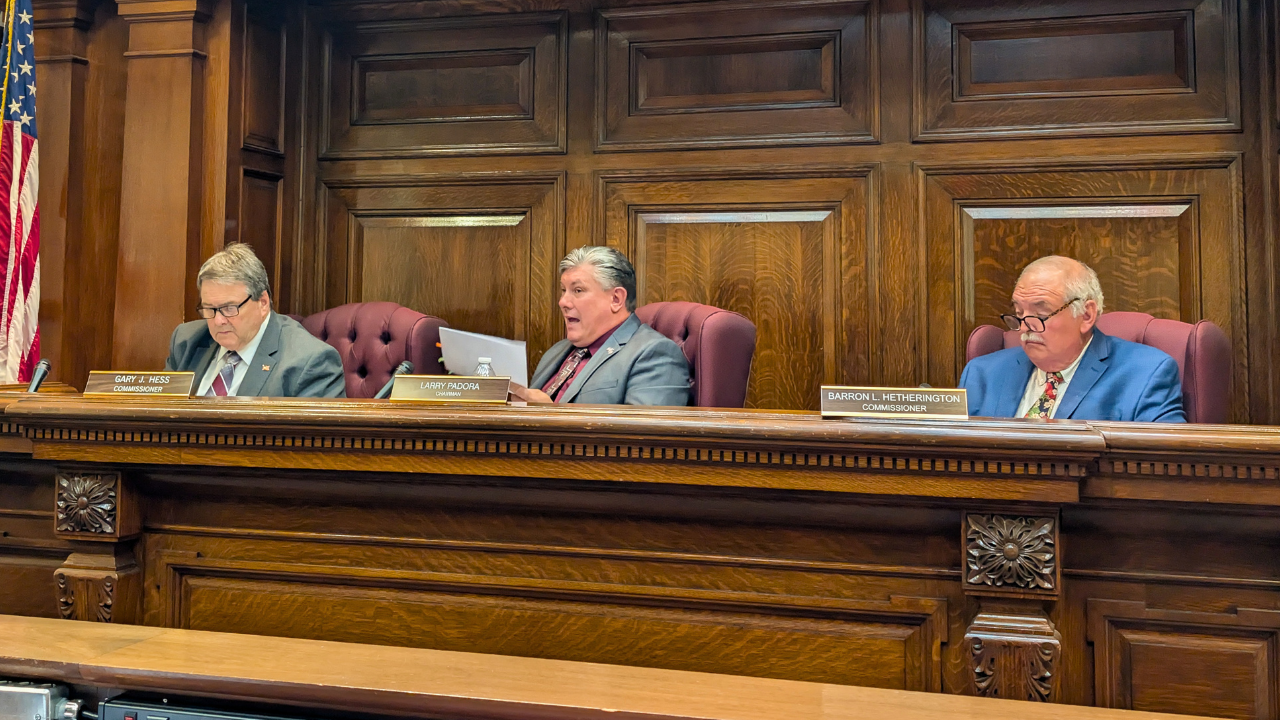
At Wednesday’s Schuylkill County commissioners meeting, Bernie Karpovich, of Butler Township, said an ordinance approved by adjacent New Castle Township will allow a data center up to 80 feet high to be just 200 feet from his street.
But because New Castle has its own zoning, the county can’t intervene, Commissioners Chair Larry Padora said.
For municipalities that follow the county’s zoning, he has submitted guidelines modeled after Shapiro’s to the County’s Planning Commission, which is meeting Wednesday at 6 p.m., the same time as the commissioners are.
Padora, who advocates data centers for abandoned coal mining and industrial areas but not farmland or residential locations, said three projects in our county would provide more than enough money to close a budget deficit.
The impact of data centers can be huge, but we also must look at AI itself. While it has it uses, how much of it do we really need? How many human functions should it replace?
And how much can humanity withstand?
Canary note: Opinions expressed in any Op-Ed column appearing on this site are the views of the writer and are not necessarily the opinions of Coal Region Canary.
Want to be a columnist with Coal Region Canary? Contact us at newscanary@gmail.com.
Subscribe to Coal Region Canary
Get email updates from Coal Region Canary by becoming a subscriber today. Just enter your email address below to get started!Support Coal Region Canary
Like our reporting and want to support truly local news in Schuylkill County? Your small donations help. For as little as $5, your contribution will allow us to cover more news that directly affects you. Consider donating today by hitting the big yellow button below ...